


Dear Practitioners,
If you wish to monetise markets that move between headlines—rather than remain dependent on them—this series is foundational. This instalment, more so.
When Tools Become the World is cornerstone work for those who aim to become all-seasons traders. It is equally essential for those who have so far attempted, unsuccessfully, to become purely “technical” traders without recognising the deeper follies and implications that come with the territory—and the many errors that follow from developing that approach in isolation.
Note that I will strictly avoid using the term “technical trader.” We have written loudly and consistently that the label is, at best, reductive and redundant; at worst, it embeds failure from the beginning—as explored in last week’s instalment.
To develop a process that monetises the flows occurring between headlines—where narrative, positioning, and sentiment gradually, then suddenly, reprice the market—one must understand what correct judgement looks like, and especially what failure of judgement looks like in this approach. This will likely involve some kind of tool, perhaps a chart. Yet almost certainly, it will be approached the wrong way unless the underlying principles are first understood.
So far, understanding the confusion of tools for markets has required moving upstream. In Parts I, II(a), and II(b), we examined demarcation and reductionism; language as framework and the danger of naming too early; the inversion of map and territory; the confusion of representation for reality; Gaussian smoothing that privileges repetition; the self-sealed system; and the deeper tension between continuity and contingency that defines the Singularity of Now.
Part III turns to consequence.
Editorially, the timing matters. Since November and December of last year—and increasingly into this year—markets have offered persistent opportunity in the flows between headlines. The most meaningful moves have not always originated from the headline itself, but from the gradual repricing of expectations that follows. These conditions reward those capable of navigating narrative and sentiment as they evolve in real time. It is also an environment in which examples and lessons are unusually clear—the lowest-hanging fruit for those willing to learn while participating.
To an outsider, this may appear as a lattice of disparate frameworks—perhaps Market Profile among them—yet what is being exercised is not a tool, but judgement. There remains strong aversion to this mode of operating, particularly among those who attempt to adopt frameworks without first internalising the underlying principles. Many fall into precisely the errors we have examined—and will continue to examine.
If this series does anything, I hope it dispels that aversion and encourages development toward these pastures while they remain fertile. Even imperfect participation can be instructive—and, at times, rewarding. That is preferable to endlessly reheating fragments of what once worked, without knowing when—or if—they will work again. What then?
If one wishes to operate as an all-seasons trader—in the manner of The Hero, The Engineer, or The Student—this piece must be deeply internalised.
Good reading and good trading to you all,
Bogdan
Positions:
In a non-linear domain, the normal is survivable but rarely monetisable.
What becomes legible to a tool has usually arrived too late to matter.
Edge is not a possession; it is a consequence of meeting a singular moment correctly.
Tools tax the ordinary so that nothing remains for the exceptional.
A trader exhausted by the normal cannot thrive in the abnormal.
Reminder:
If you missed the Asymmetrist 2.0 announcement and the move to paid subscriptions, you can catch up here.
If this publication sharpens how you see markets, you’re welcome to support it as a paid subscriber.
To mark the relaunch, and as a thank you to early readers, a one-off Early Reader annual rate is available until 28 February.
Part III: Erasing the Exceptional
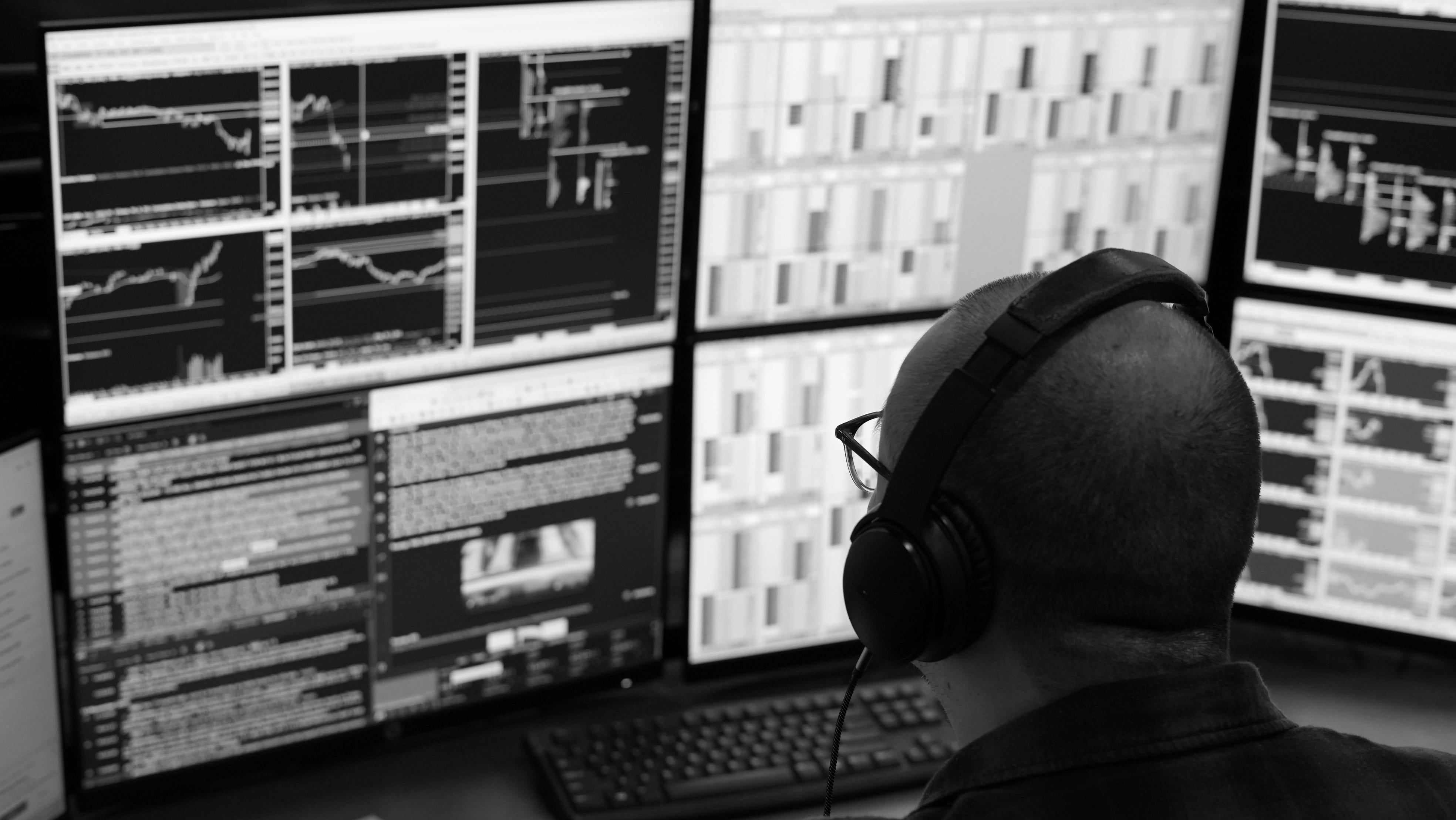
Now we turn to what tools specifically erase and how this directly affects trading and performance. Chiefly, tools erase the exceptional, the unstable, the non-repeatable—the very conditions in which careers are actually built.
Markets reward timing within asymmetry, not constant participation. If the latter describes your recent trading, and you have seemingly monetised it, be extremely wary: such monetisation is likely temporary. For an outright, long-volatility futures trader, it is the minority of moments that carry disproportionate weight in lifetime P&L. The distribution is not uniform, nor predictable, nor linear. It is power-law-like. In such a domain, any tool or representation of the market that trains the trader to behave linearly—to expect repetition, to monetise the normal—is misaligned with reality. Worse, it misleads by creating its own reality in which so many become trapped.
Longevity in this profession comes from operating in alignment with asymmetry: recognising when timing matters, and acting decisively when it does. If outcomes are welded in the present by contingent inflections—unique one-offs—then performance cannot be linear. Any tool that trains linear behaviour does not merely misguide; it corrupts how a trader perceives the imperatives and priorities of their career.