



Inside LIFFE
Archive footage of Simon Harris trading on the floor in 1990s London.
First appearance at 3:24—red jacket, ICS badge, great tie.
Dear Practitioners,
Welcome to the beginning of Publication Cycle III—and, with it, something new for Asymmetrist.
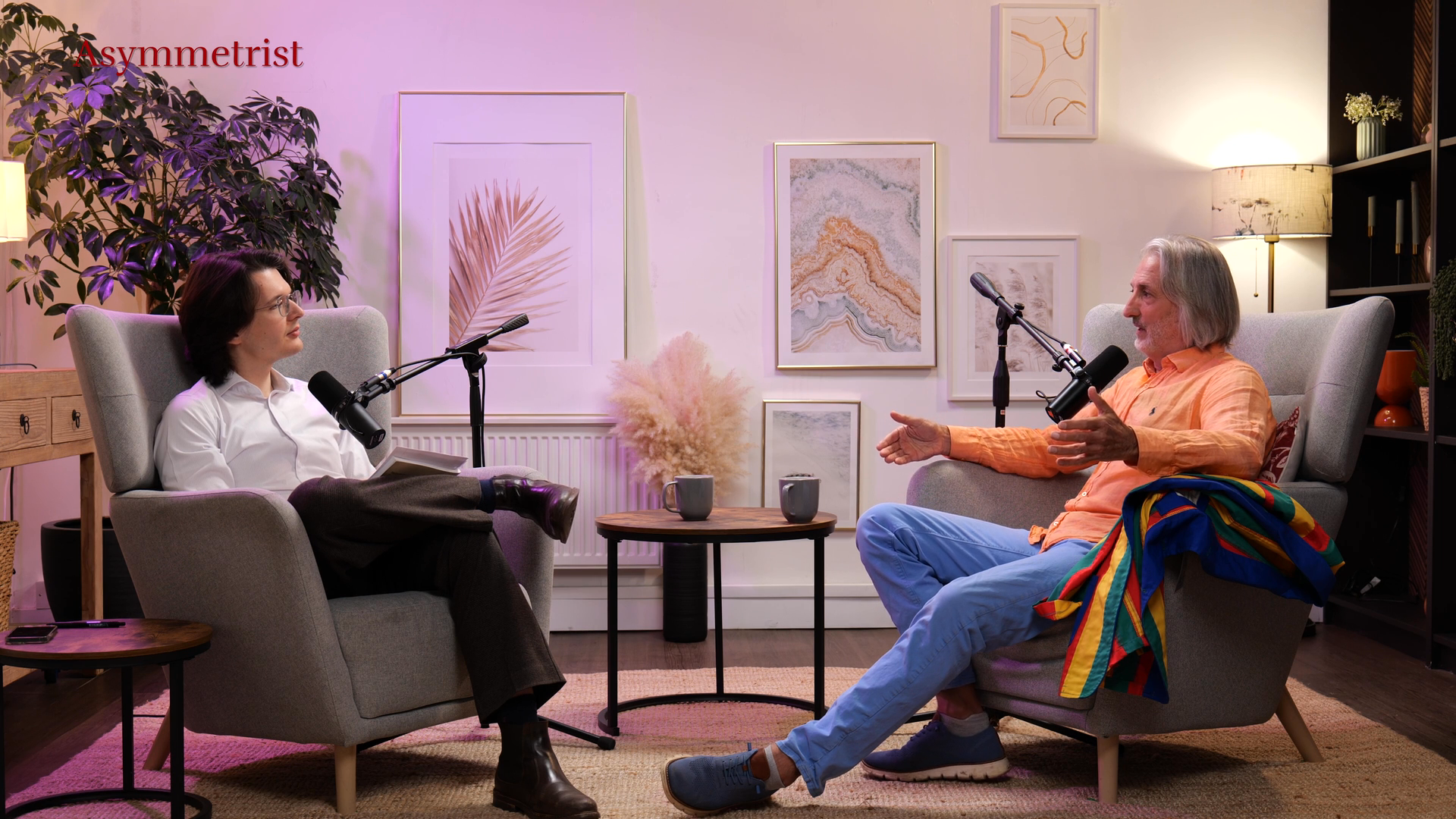
This is the publication’s first full-length video and audio conversation: a three-hour exploration with Simon Harris, who began his career in the 1980s on the London International Financial Futures and Options Exchange (LIFFE) floor. Simon was there on the very first day of the FTSE 100 pit and remained through to its final day of physical trading in 1999. Over time came the transition towards screen-based trading, hedge fund management, and, eventually, a very different kind of work: neuroscience-based performance and nervous-system regulation.
Alongside all of this has existed another recurring thread—speed. Championship motorsport, track driving, skiing, sailing, and the continual navigation of uncertainty in multiple forms. Speaking personally, spending several hours in conversation with Simon felt less like a standard interview and more like entering into the accumulated reflections of someone who has lived through several vanished market worlds and somehow continued adapting through each of them.
What follows moves across a wide terrain: pit culture, instinctive market reading, crowd psychology, trader development, pressure, emotional patterns, performance, altered states, and what prolonged exposure to volatility and uncertainty ultimately leaves behind beneath the surface of a person.
Towards the end, things move into different territory still, as I also try on camera the Lucia Light—a device intended to induce altered states and shift the nervous system—before returning in the outro several days later to attempt to put that experience into words.
Three hours were much too short.
If this is a format you would like to see more of on Asymmetrist—including longer-form conversations of this kind—please do let me know below. In many ways, this feels like a natural extension of the publication’s broader aim: to continue building out deeper forms of long-form exploration around markets, practitioners, and the environments that shape them.
Good trading to you all,
Bogdan


