
The Warrior’s Gambit: Trading The Greenland De-escalation
Exclusive: Paying Up, Playing to Win, and Why a Near Seven-Figure Day Was a Miss
Dear Practitioners,
So—we’ve got the whole hog.
What follows is a full account of The Warrior trading the Greenland de-escalation theme in January 2026: the build-up, the false starts, and the decisive day itself.
The opening section re-establishes the context—depending on how clearly January still sits in your memory—and places The Warrior back into frame. From there, the piece moves into a long-form, direct Q&A, in the classic magazine sense.
One thing readers should know: this interview was deliberately framed as if The Warrior were speaking directly to a specific group of younger traders—already performant, fast-growing, and seven-figure traders in their own right—working on the floor as news and event traders at a stage where rare, high-impact moments are required to break through existing limits.
The question put to him was simple: what message do you need to get across to them? If it is sufficiently exacting for them, it will be instructive for you.
The final sections step back from the interview itself. The Decisive Moment: Occupy the Unnatural Position draws out the higher-level implications that emerge from the conversation. Agon goes further, touching on the nature of performance at this level, and what resistance, pressure, and underperformance mean for traders operating near their supposed ceiling.
The piece closes with a short set of practitioner questions, as prompts for reflection and application.
I want to deeply thank The Warrior for his contribution and time throughout all the below.
Good reading and good trading to you all,
Bogdan
Reminder:
Asymmetrist 2.0 is now supported by paid subscriptions.
Paid readers receive dispatches like this—direct from the trading floor—alongside long-form features and access to the growing Living Library.
Many traders across the career spectrum have made Asymmetrist part of their professional life since its first ever article. You can too.
To mark the relaunch, and as a thank you to early readers, a one-off Early Reader annual rate is available until 28 February.
The Warrior’s Gambit: Trading The Greenland De-escalation
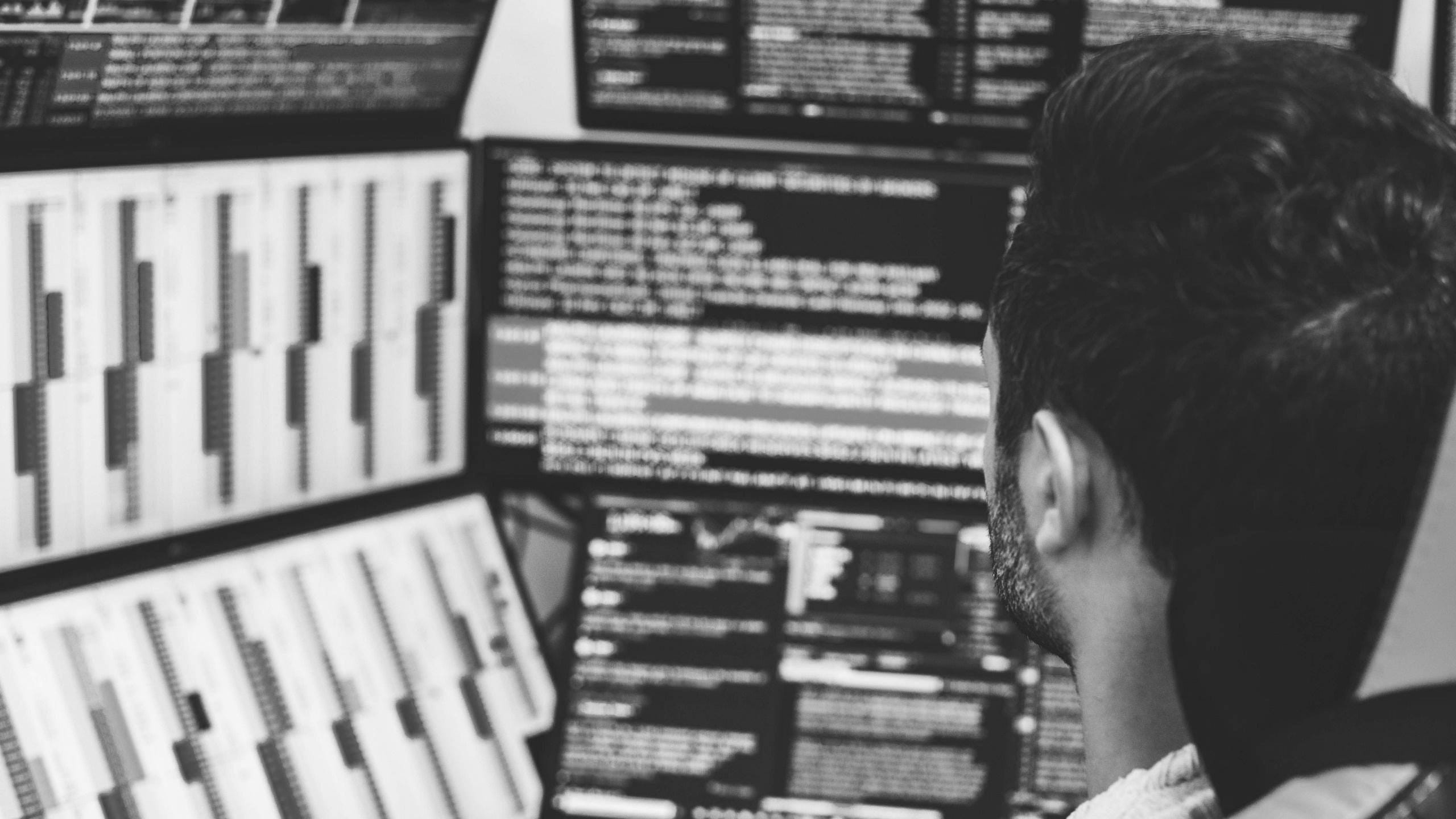
Among the AXIA trading desks.
Wednesday 21 January 2026
London, England.
Certainly, this January has not been quiet. But for those looking in from the outside, you might expect that it produced many tradable opportunities for headline-led news traders. It did not. Despite the year kicking off with Maduro and the Venezuela episode, there was little in the way of tradeable opportunity.
Then came the comedown on Trump’s threats to Iran on Wednesday 14 January. Trump said that killings in Iran’s crackdown on nationwide protests were subsiding and that he believed there was no plan for large-scale executions of protesters, a statement that appeared to draw a red line for the regime. That shift produced a paring back of Middle Eastern escalation and supply-disruption pricing through the energy complex.
After that, there were flows on 16 January around the Trump Chair nominee, though with important caveats. As one trader stressed at the time, what was reported by the newswires and what Trump actually said about Hassett—and about keeping him on as NEC Director rather than appointing him as the next Fed Chair—were not the same thing. Nevertheless, markets, and their awkward, entangled twin that has emerged alongside them—prediction markets—quickly repriced the reduced probability of Hassett as Chair and the implications that followed.
What Asymmetrist will be investigating in the coming months is precisely this shift in market state: a market increasingly defined by flows between headlines rather than on them. The core driver here has been Trump, geopolitics, and a style of communication that is often knee-jerk, occasionally hit-and-miss, and frequently framed in the language of escalation—sometimes implying war, or what has lately become the fashionable phrase, kinetic war.
In such a market regime, these moments can generate sharp reactions, but they do not always lead to durable repricing. Instead, they often exhaust traders through repetition: information trickles into the market in fragments, producing minor opportunities that dissipate a trader’s attention and aggression, long before any decisive resolution arrives. This is different from how markets digest and reprice tariffs, or other, more financial, slower-moving policy realities. Put simply: geopolitical theatre creates half-hatched volatility; policy creates determined repricing.
Then came Greenland.
Most readers will know this was not its first iteration with Trump. His interest in Greenland as a “real estate deal” dates back to 2019. But the focus of this episode began on Saturday 17 January, with threats of tariffs on European countries of ten, then twenty-five per cent. Once again, this did not produce the kind of dramatic opportunity on the Sunday open a headline alone might have suggested.
There were moments, particularly in currencies, especially in markets facing a double-whammy—such as the dollar being offered on the news while safe-haven flows returned to the Swiss franc, helped by the fact that Switzerland was not among the countries named.
Even so, judged by the headline itself and the reaction to it, this episode again illustrated a deeper problem: if your framework for trading direction, confirmation, duration, and size is built primarily on the headline—rather than on other ways of understanding where, when, for how long, and by how much markets might move—then that framework is fragile, because it mistakes reaction for opportunity.
At that point, the question was unavoidable: was this escalation, or another TACO—Trump Always Chickens Out?
There were flows into bonds on the idea that Europe might reduce exposure to U.S. Treasuries, reinforced by a headline suggesting that a Danish pension fund, AkademikerPension, intended to “divest” part of its U.S. Treasury holdings. Whether or not that decision was directly tied to the Greenland saga, the market heard what it heard. The vortex strengthened: the S&P sold off, the dollar weakened, yields firmed, and for a moment the move accelerated. And yet, once again, most of what was tradable emerged between the headlines rather than on them.
Readers—particularly those reading in the far future—can imagine the media mania: editorial pieces proliferating across the spectrum and the globe—international rules! order!—while forgetting that a rules-based geopolitical order is itself something of an anomaly if one looks beyond the twentieth century.
The proliferation becomes complete when those far outside trading and finance begin asking you, the trader, what’s going to happen next. This is always a sign—and for traders, never a good one. It means the theme has moved from shock to anticipation, and anticipation bleeds opportunity. Ideally, one is out of their news trade before the papers even print, or the pundits get their airtime.
Then finally came Wednesday 21 January. Even though traders were waiting for a Davos speech or an official line, the decisive moment did not arrive through the usual channels. It arrived on Truth. Trump posted that a framework with NATO had been agreed. In that moment, the theme is done, and the market reacted instantly.
And now we come to view this trade via The Warrior, who readers will likely know from Traders of Our Time: an eight-figure trader and, ostensibly, of the news-trading type—though this does him a disservice by pigeonholing him like this. It speaks to the strength of a trader when they cannot be boxed in as such. It also speaks to the fragility of another if they can.
He trades out of AXIA’s London desks. Let’s introduce him from Traders:
“This moment, the peak—the gyration of events, of positioning, re-pricing, narratives and themes that suddenly click into place and then shatter, a singular watershed moment is the entirety of The Warrior’s career. A trader of a sample set of one—of these tail events. Whereas others may trade the ninety-nine samples that condition the markets, he trades the—surprise!—the very next sample, to break all the rules … A spectacle indeed, but his trading engine is as blunt and straightforward as it is slick and precise. The space reflects the man. Thoughtful craftsmanship mirrors the intensity of purpose: built for speed, built to execute and built to conquer. The man who sits here is a trader’s trader.”
It is within this context that The Warrior’s stance needs to be understood. This was his biggest day of the year so far, not far shy of a seven-figure day. And yet, by his own admission, it should have been much, much bigger. Nor, of course, would it really stack up against his real career-making days. Fate, as he would put it, had other intentions.
But the real interest here lies in the negative space: the ability not to overtrade what appear, on the surface, to be monumental opportunities—moments heavy with media attention, historical weight, or geopolitical drama—and not get pulled into the vortex they create. Instead, the discipline to trade what the market is actually doing, or not doing.
This demands the capacity to tolerate the disparity between apparent opportunity and what the market is actually offering. It also demands the ability to wade through these regimes—making and losing, making and losing—especially under the strain created when markets repeatedly reprice between headlines rather than on them. And then, when the moment finally arrives, there is the harder task still: discarding everything that came before and striking decisively.
As the account below shows, even starting on the back foot, with opportunities already seemingly lost, The Warrior still finds a way to get the win. From the outside, a near seven-figure day might look like a gigantic victory. But everything is contextual. Where someone sits in their career matters. At his stage, performance is judged by whether a rare, non-linear moment was fully captured, not by P&L in isolation. In The Warrior’s position, the greatest risk is not getting it wrong; the greatest risk is missing the opportunity altogether. From his vantage point, this day registers as a missed one. And at this level, partial capture does not count as capture at all.
Yet this is precisely what defines him. When pushed to the brink, when operating from disadvantage, he often executes at his best. As he once said, he needs to be pushed, and punished by the market first, before the really large up days can appear. It is within this counterintuitive resilience that certain traders reveal themselves. They are forged under pressure, thriving on the edge—and they are precisely the kind of traders you would want on your desk.
Interviewing The Warrior: January 2026
I. The Moment
Q: Take me back to the moment itself. Where were you, what state were you in, and what did you actually do—second by second?
The Warrior (W): I was slow to react, and I was so angry about it initially. For a moment, it brought back memories of the “Missed Rate Cut” trade1, as slow execution on events like this can have a material impact on your P&L.
I’d had three bad days leading into this moment and was trying to buy the Spoo and put on risk-on trades for most of the day, without success. I remember seconds before it hit, I’d just cut my long Spoo [S&P], leaned back in my chair, picked up my phone, and started texting.
Then our Truth Social Alert pinged. I turned to my ladders and watched them all disappear off the screen.
I grabbed my mouse, and without knowing what was out, I just lifted a couple of clips in Stoxx and Spoo. Bad fills, very bad prices—so much higher than where the markets were trading a few seconds earlier. Social media-scraping algos had repriced the markets in milliseconds. And those first couple of seconds matter enormously for a trade like this. Getting good initial fills is what enables you to add in the next few seconds.
I think it took a few more seconds for me to register exactly what had happened: there was a deal on Greenland and tariff threats removed. The definitive theme-ending comment. That’s when I added to Spoo, Stoxx, and went big in the DAX and sold five to six clips in the Euro.
The Euro had rallied a lot since the weekend’s tariff threats as traders sold the Dollar across the board. Hitting the Euro with the idea of buying Dollars—on the view that the “Sell America” trade had to unwind—didn’t end up being the best trade, if I’m honest.
A lot of the time in fast-moving events like this, when everything explodes so quickly, the instinct is to clip the market that hasn’t moved much yet—the one that looks like it’s lagging behind. It feels like it’s a safer bet. But experience says otherwise. If a market lets you offload five to six clips at roughly the same price—i.e. you’re getting “good” prices—it’s usually because it’s not going to react properly to the news. Which is what happened in this case. It was choppy and unreactive, and in hindsight not the best one to hit.
Even so, this was the comment that settled the theme. A huge relief rally was to be expected. Deal is done, tariff threats gone. This also came on the back of three days of selling in equities, so you expect a violent reaction: the more the selling, the more the upside.
But I was quite upset because I did not hit Gold, which is what I really wanted to be in. It had rallied so much on safe-haven flows leading into this, so a significant unwinding was to be expected. I rushed into everything else except that, and I was very angry when I looked at my chart and saw how far it had gone. It did a massive move in the first ten seconds. I still went in and sold it, but at awful prices. And when I did, it instantly had a massive pullback, which made me cut some size straight away. As a result, I ended up botching the Gold trade and not running it the way I wanted. Overall, not the best execution there.
In any case, having maxed out across these markets, it was all about surviving the initial chop that tends to come after such a big move within seconds. I knew the risk of washbacks was high, but I had conviction that the news was significant enough for the market to keep going eventually. It was the comment that ended the theme right there and then, and the moves that came with it had to retrace in a big way.
In the end, I did well in Spoo and Stoxx, and not so well in Gold, Euro, and DAX, as I had the worst fills there. I was actually very gutted and felt my P&L could have easily been two or three times larger if I executed faster and more aggressively in the right markets. In hindsight, I should have gone for just Spoo and Gold—they did the best moves by far.

II. Conviction and Breaking the Rules
Q: How were you framing the Greenland theme in advance and why did that make this an upside-only trade for you?

